
Cómo los rodillos tensores de baja fricción reducen el consumo de energía
Release time: 2026-04-02
Tabla de contenido
In the demanding world of bulk material handling, operational efficiency and cost management are the cornerstones of a profitable enterprise. Conveyor systems are the lifelines of mining, cement, and power generation industries, moving thousands of tons of material daily. However, these massive systems are also some of the most significant consumers of electricity in any industrial plant. As energy prices continue to rise and environmental regulations become stricter, plant managers are aggressively seeking ways to cut power usage.
One of the most effective, yet frequently overlooked, methods to achieve substantial energy savings is upgrading the conveyor system’s components—specifically, investing in low-friction carrying idlers. By addressing the root cause of mechanical drag, facilities can significantly reduce conveyor operating costs while extending the lifespan of their equipment.
In this comprehensive guide, we will explore the mechanics behind conveyor power consumption, how low-friction idlers solve this problem, and why upgrading your system is a financially sound decision.
Understanding Conveyor Power Consumption
To understand how we can save energy, we must first look at where the energy is being spent. In a standard belt conveyor system, the electric motor must generate enough torque to overcome several forms of resistance:
- Gravitational Lift: The energy required to elevate the material from the tail to the head pulley.
- Material Acceleration: The power needed to accelerate the material as it drops onto the moving belt.
- Frictional Resistance: This is the most variable and controllable factor. It includes the friction between the belt and the idlers, the indentation rolling resistance (the deformation of the rubber belt as it rolls over the idlers), and the rotational resistance of the idlers themselves.
In long, overland conveyor systems, frictional resistance can account for over 60% of the total power consumption. Every single idler on the carrying side of the belt contributes to this drag. If you have a conveyor with thousands of standard rollers, even a slight increase in the rotational friction of each roller compounds into a massive drain on the motor.
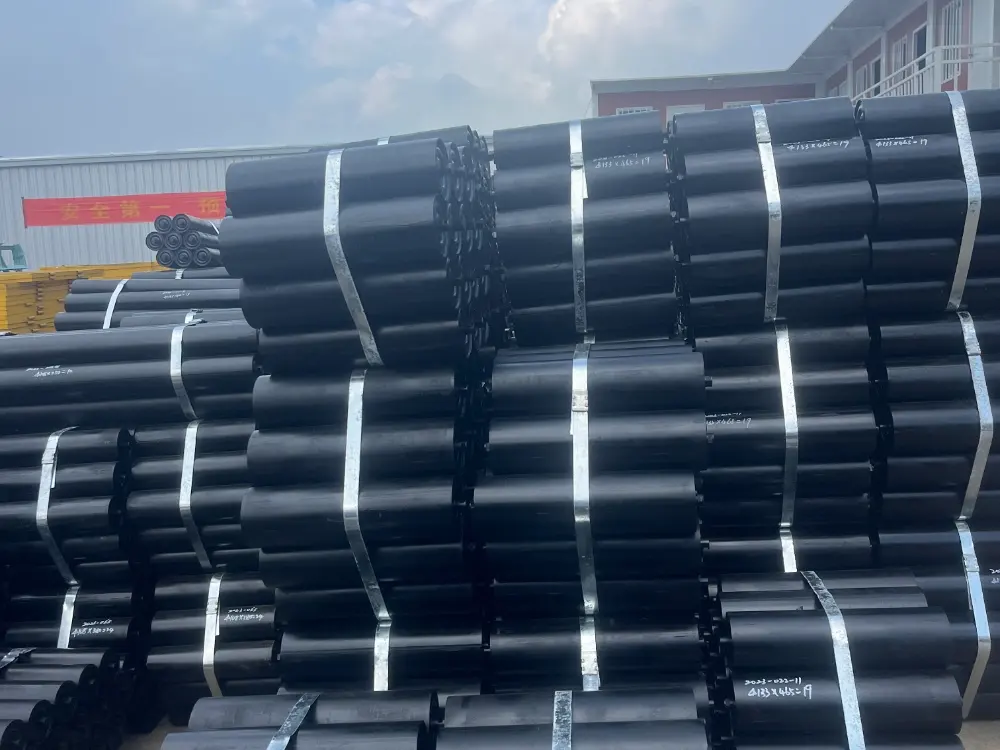

The Mechanics of Low-Friction Carrying Idlers
Standard idlers often prioritize basic functionality over energy efficiency. Over time, poor seal designs allow dust and moisture to penetrate the bearing cavity, causing the grease to degrade and the bearings to stiffen. This significantly increases rotational drag.
Conversely, low rolling resistance idlers are engineered specifically to minimize drag from the moment they are installed until the end of their operational life. They achieve this through several critical design innovations:
1. Advanced Bearing Technology
Low-friction idlers utilize high-precision, deep-groove ball bearings that are manufactured to exact tolerances. These bearings require less force to rotate. Furthermore, they are packed with specialized synthetic grease that maintains a consistent, low-viscosity state across extreme temperature ranges, ensuring smooth rotation whether it is freezing cold or blistering hot.
2. Optimized Sealing Systems
The seal is the most crucial component for maintaining low friction. Traditional contact seals rub tightly against the rotating shaft to keep contaminants out, which inadvertently creates a high degree of mechanical drag. Modern low-friction idlers use advanced labyrinth seal designs. These multi-stage, non-contact seals create a complex, grease-filled path that traps dust and water without creating physical friction against the rotating axis.
3. Precision Manufacturing and Low TIR
Total Indicator Runout (TIR) measures how much a roller wobbles as it spins. Rollers with high TIR bounce against the conveyor belt, causing micro-vibrations, increased indentation resistance, and energy loss. High-quality low-friction idlers are machined to have exceptionally low TIR, ensuring perfectly concentric rotation and a smooth ride for the belt.
The Direct Benefits of Upgrading
Transitioning to low-friction carrying idlers offers a cascading series of benefits that go far beyond just saving a few kilowatts.
- Substantial Energy Savings: By reducing the cumulative rotational drag along the entire length of the conveyor, the main drive motors draw significantly less amperage. On long conveyor flights, power consumption can be reduced by 10% to 15%, translating to tens of thousands of dollars saved annually.
- Extended Belt Life: Less friction means less tension is required on the belt to keep it moving. Lower belt tension reduces the strain on splices and decreases the wear on the bottom cover of the belt, pushing back the timeline for costly belt replacements.
- Downsized Motor Requirements: For new conveyor installations or major overhauls, utilizing energy-efficient conveyor rollers allows engineers to specify smaller, less expensive drive motors and gearboxes, reducing initial capital expenditures.
- Enhanced ESG Compliance: Reducing power consumption directly lowers a facility’s carbon footprint, helping companies meet their Environmental, Social, and Governance (ESG) targets and comply with governmental energy regulations.
Why Choose Yili Machinery?
When it comes to optimizing bulk material handling efficiency, the quality of the components you choose makes all the difference. As a leading manufacturer in the industry, Yili Machinery has dedicated extensive research and development to mastering the science of low-friction conveying.
Yili Machinery carrying idlers are engineered with proprietary labyrinth sealing technology and premium-grade bearings, ensuring they deliver industry-leading low rotational resistance. Designed to withstand the harshest environments—from dusty mining operations to humid port terminals—Yili’s idlers protect the internal bearings while maintaining effortless rotation. By partnering with Yili Machinery, facilities can trust that they are installing a product proven to reduce downtime, lower energy bills, and maximize the overall profitability of their conveyor operations.
Conclusión
The power consumption of a conveyor system is not a fixed cost that plant managers must simply accept. The friction generated by thousands of standard idlers is a massive, hidden expense. By upgrading to low-friction carrying idlers, operations can significantly reduce the mechanical drag on their systems, lower motor energy requirements, and extend the lifespan of expensive conveyor belts. It is an investment that pays for itself, driving your facility toward a more profitable and sustainable future.
Frequently Asked Questions (FAQs)
Q1: How much energy can I realistically expect to save by switching to low-friction carrying idlers?
A: Energy savings vary based on the length of the conveyor, the payload, and the condition of the existing idlers. However, on long overland conveyors, replacing standard rollers with low-friction alternatives typically reduces the total power consumption of the conveyor system by 10% to 15%.
Q2: Are low-friction idlers durable enough for heavy-duty mining applications?
A: Yes, absolutely. High-quality low-friction idlers are specifically designed for heavy-duty environments. The “low-friction” aspect comes from advanced non-contact labyrinth seals and precision bearings. These seals are actually more effective at keeping out abrasive mining dust and water than traditional tight-friction seals, resulting in a longer operational lifespan.
Q3: Is it necessary to replace all idlers at once to see a reduction in power consumption?
A: While replacing all carrying idlers at once will yield the most dramatic and immediate energy savings, it is not strictly necessary. Many facilities adopt a phased approach, replacing standard idlers with low-friction models during scheduled maintenance or as the old ones fail. Over time, as the proportion of low-friction idlers increases, the energy efficiency of the conveyor will progressively improve.

