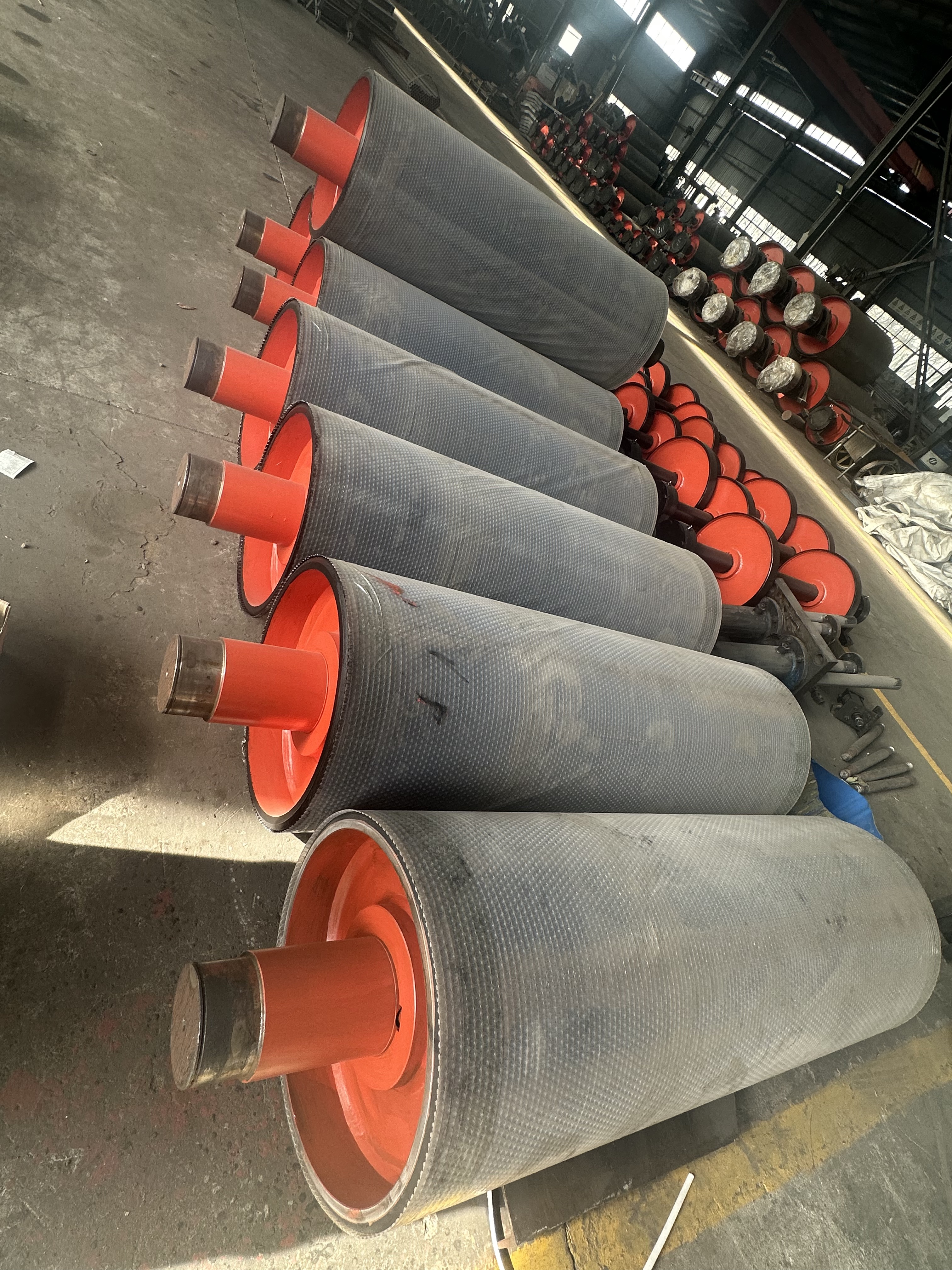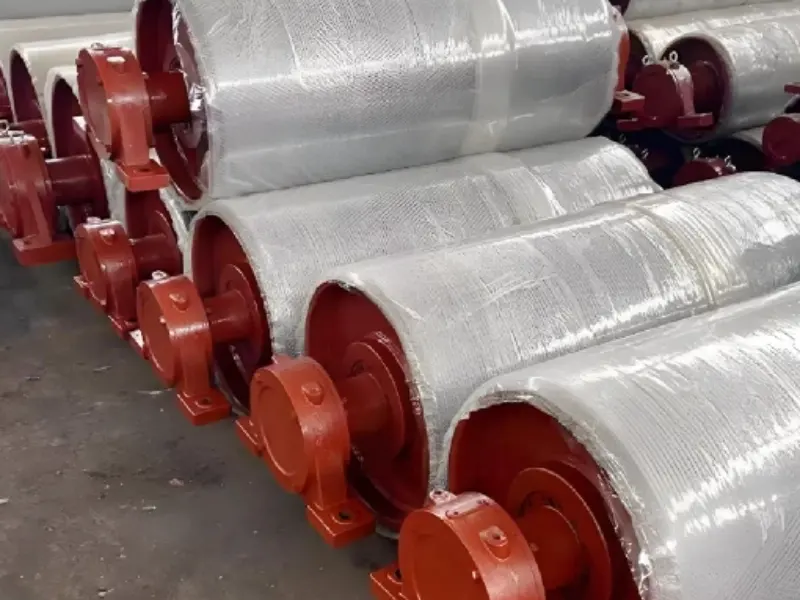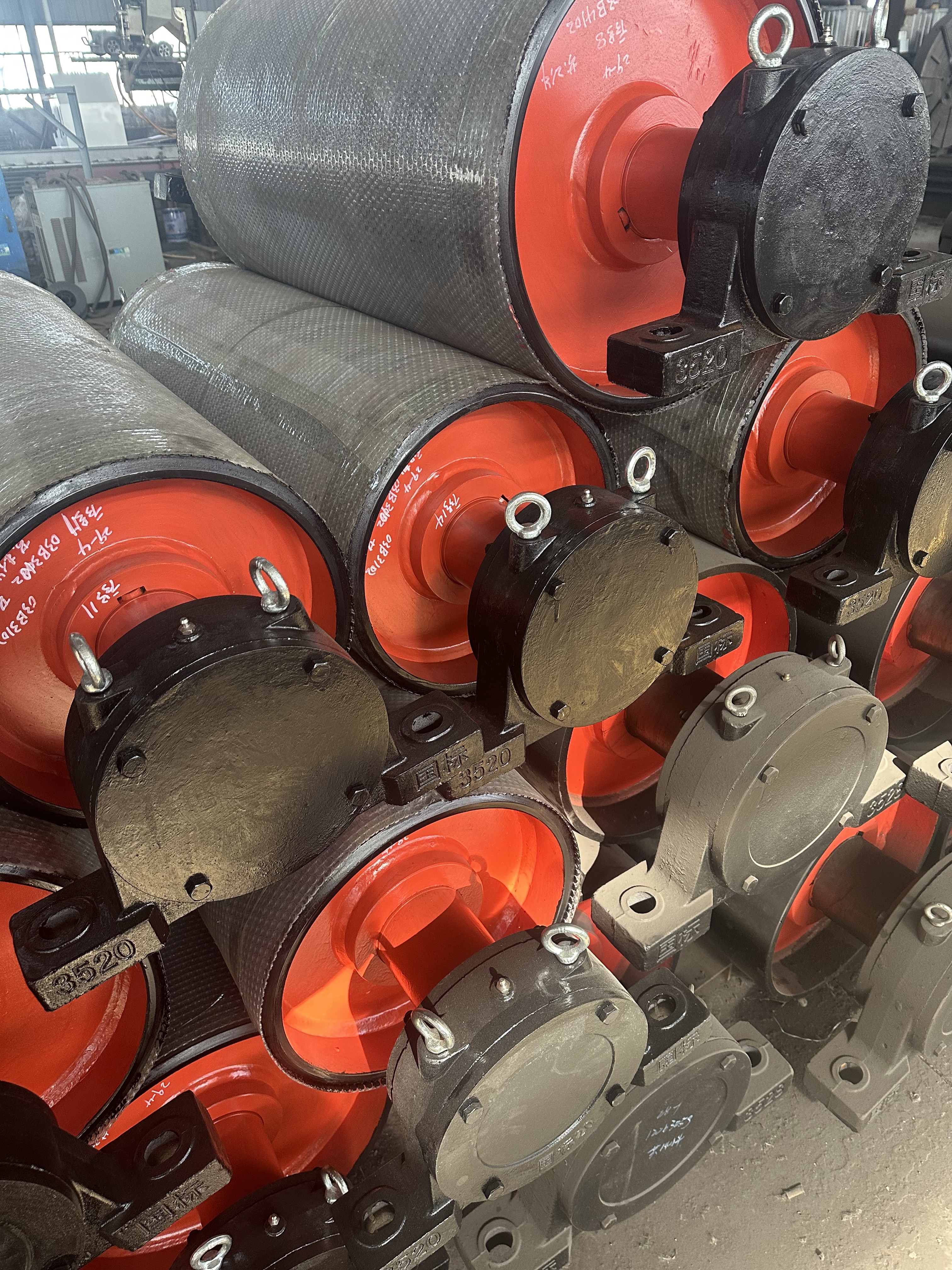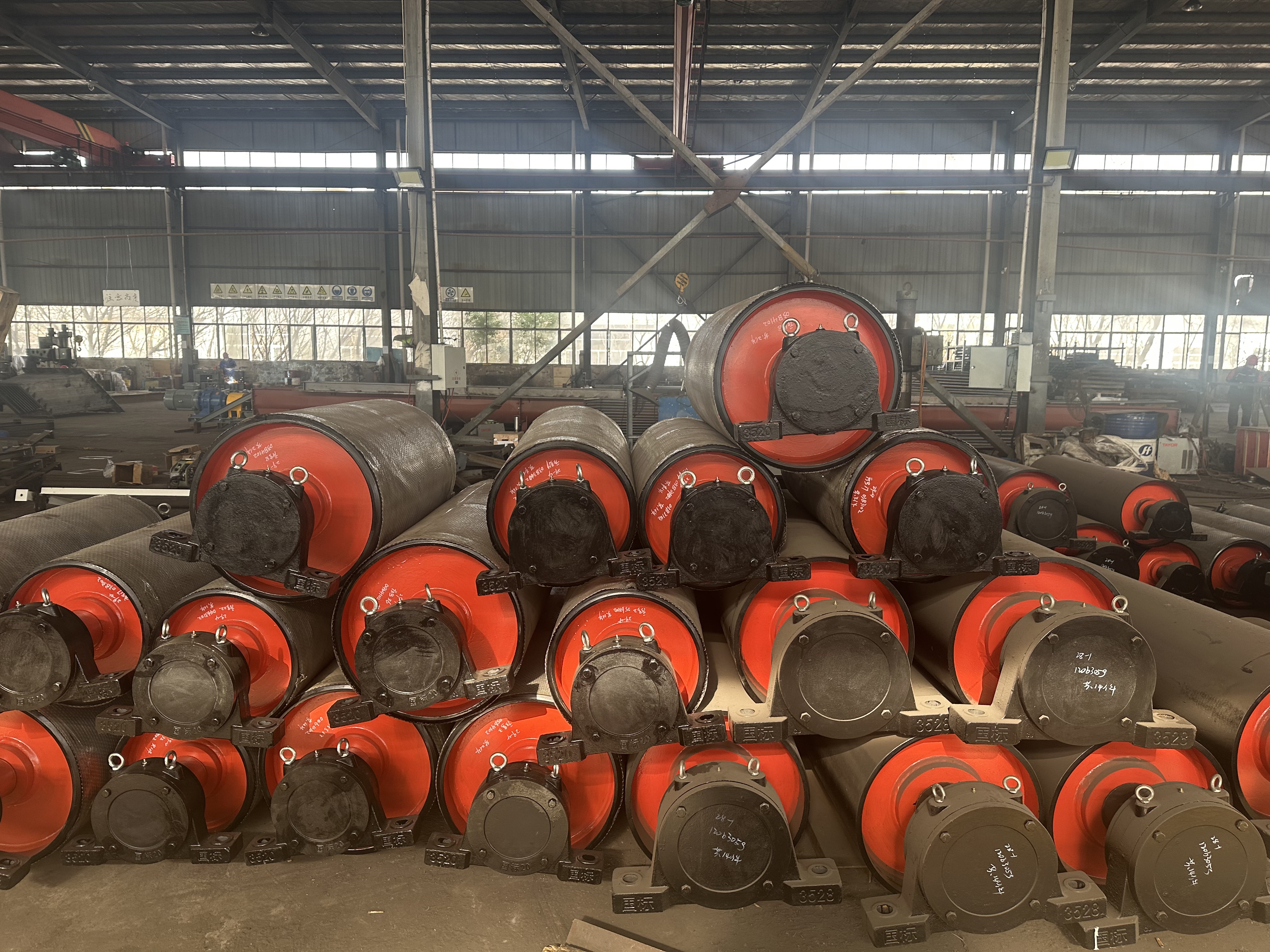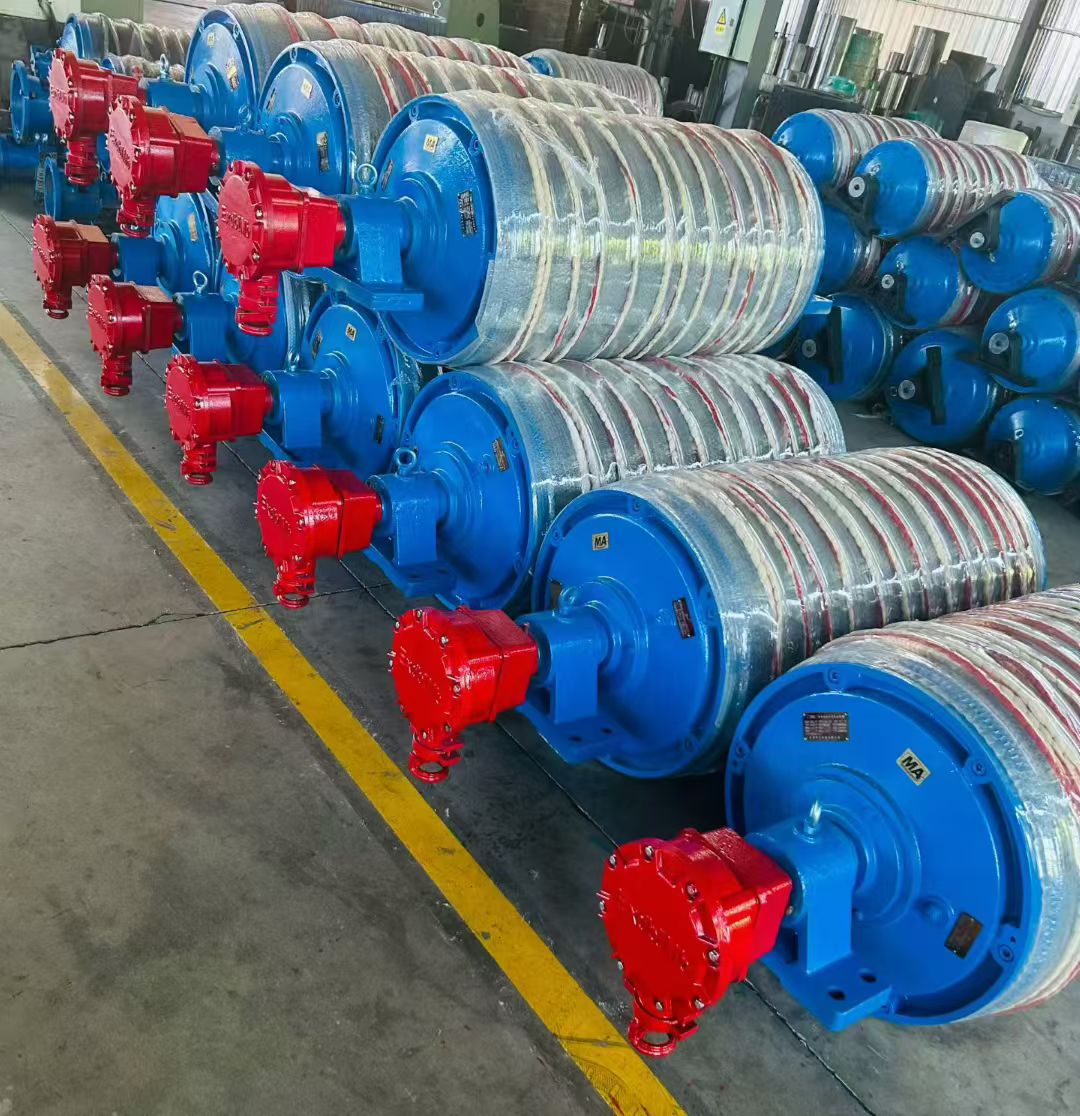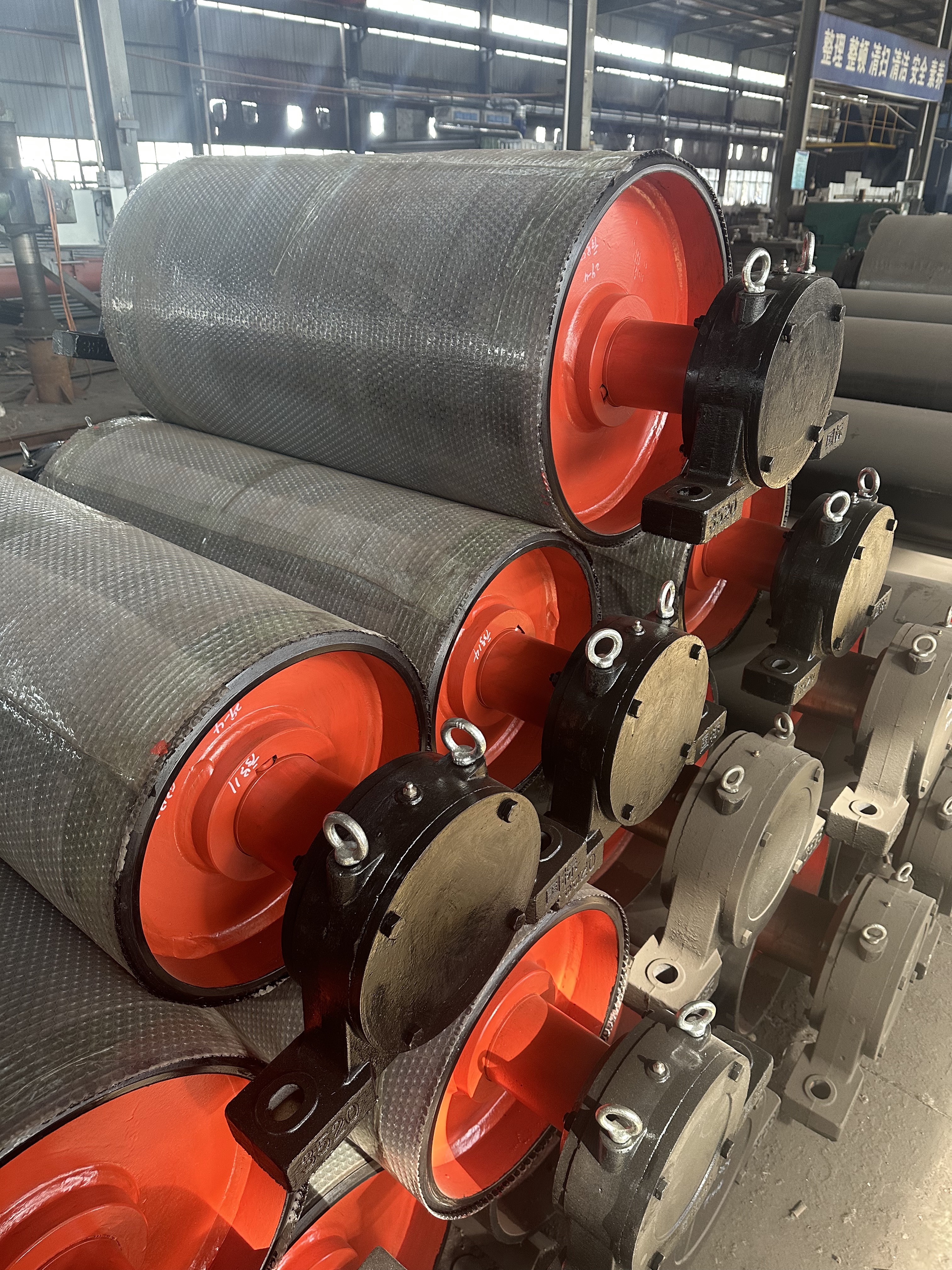
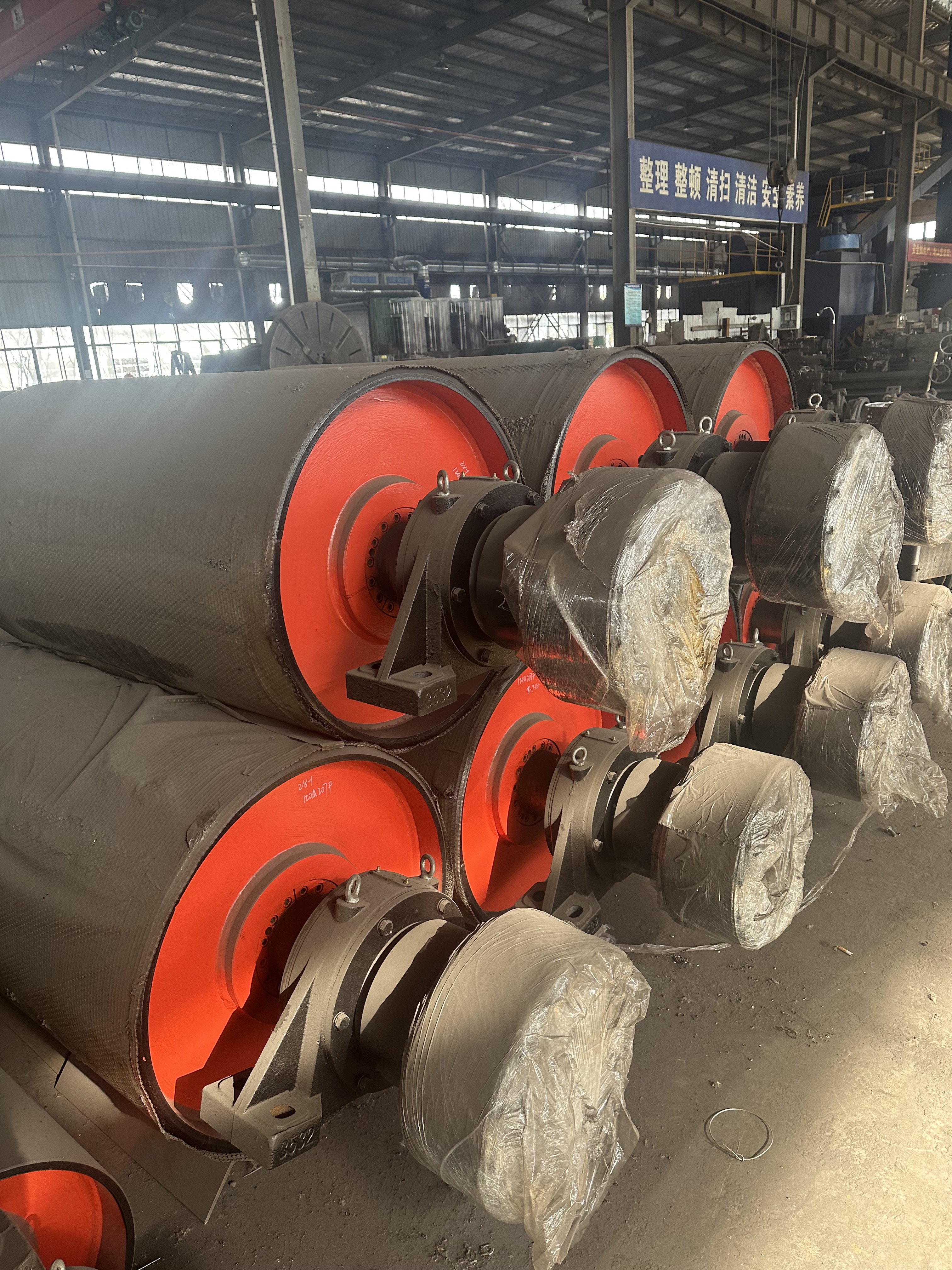
Eliminate belt slippage and extend your pulley's service life with our premium Rubber Lagged Pulleys. Utilizing advanced Hot Vulcanization technology, the rubber layer is permanently chemically bonded to the steel shell, ensuring it will not peel off even under high torque. Available in Diamond, Herringbone, or Plain surfaces to suit your specific bulk handling requirements.
Product Overview
A Lagged Pulley is essential for improving traction (friction) between the conveyor belt and the pulley, especially in wet or muddy environments. It also acts as a protective layer, shielding the steel shell from wear and corrosion.
We manufacture lagged pulleys for both Drive (Head) and Non-Drive (Tail/Bend) positions. Our facility is equipped with large-scale vulcanization autoclaves to handle pulleys up to Ø1600mm+ in diameter.
Lagging Types & Applications
- 1. Diamond Pattern Rubber Lagging (Most Popular):
- Feature: Grooves are cut in a diamond pattern.
- Function: The grooves allow water and dirt to escape (water-shedding), significantly increasing grip coefficient.
- Application: Ideal for Drive Pulleys and reversible conveyors.
- 2. Plain / Smooth Rubber Lagging:
- Feature: Smooth surface without grooves.
- Function: Protects the non-drive pulleys from wear and increases belt tracking stability.
- Application: Snub Pulleys, Bend Pulleys, and Take-up Pulleys (dry conditions).
- 3. Ceramic Lagging:
- Feature: High-alumina ceramic tiles embedded in a rubber matrix.
- Function: Extreme wear resistance (3-5x longer life than rubber) and zero slippage.
- Application: High-tension, heavy-duty drive pulleys in coal mines and iron ore terminals.
Our Manufacturing Process: Hot Vulcanization vs. Cold Bonding
We prioritize Hot Vulcanization. The pulley shell is sandblasted, primed, and wrapped with uncured rubber, then placed in a high-pressure steam autoclave.
- Result: The rubber and steel become one integral unit.
- Benefit: No peeling, no bubbling, and much higher shear strength compared to on-site cold bonding.
Technical Specifications
| Parameter | Specification Details |
| Shell Material | Carbon Steel Q235B / Q345B |
| Lagging Material | Natural Rubber (NR) / SBR / Ceramic-Rubber Composite |
| Lagging Thickness | Standard: 10mm, 12mm, 15mm, 20mm |
| Rubber Hardness | 60 ± 5 Shore A (Standard) |
| Abrasion Loss | < 120 mm³ (DIN 53516 Standard) |
| Bonding Strength | > 12 N/mm (Rubber to Steel) |
| Groove Pattern | Diamond (Rhombus), Herringbone, or Smooth |
| Shaft Standard | 45# Steel / 40Cr (ISO/CEMA dimensions) |
| Color Options | Black (Standard), Red, Blue |
Quality Inspection
- Visual Check: No air bubbles or impurities on the surface.
- Dimension Check: Rubber thickness uniformity.
- Hardness Test: Verified using a Shore A Durometer.